The Ash Tree Crisis in Grand Junction
Ash trees make up approximately 20 percent of the urban tree canopy in Grand Junction, representing one of the highest concentrations of this species in any Western Colorado city [1]. Unfortunately, these beautiful shade trees are currently facing an unprecedented crisis. Driven by exceptional drought conditions and a rapidly growing insect population, more than 2,000 local ash trees have suffered severe insect damage since 2021 [2]. The situation has reached a critical tipping point, with the City of Grand Junction projecting that more than 8,000 ash trees will need to be removed by the end of 2026 to mitigate the spread of these destructive pests [3]. For local homeowners, taking proactive steps to evaluate and manage the ash trees on their property is no longer optional—it is a necessity to protect property values and prevent hazardous tree failures.
Understanding the Pests: Emerald Ash Borer and Bark Beetles
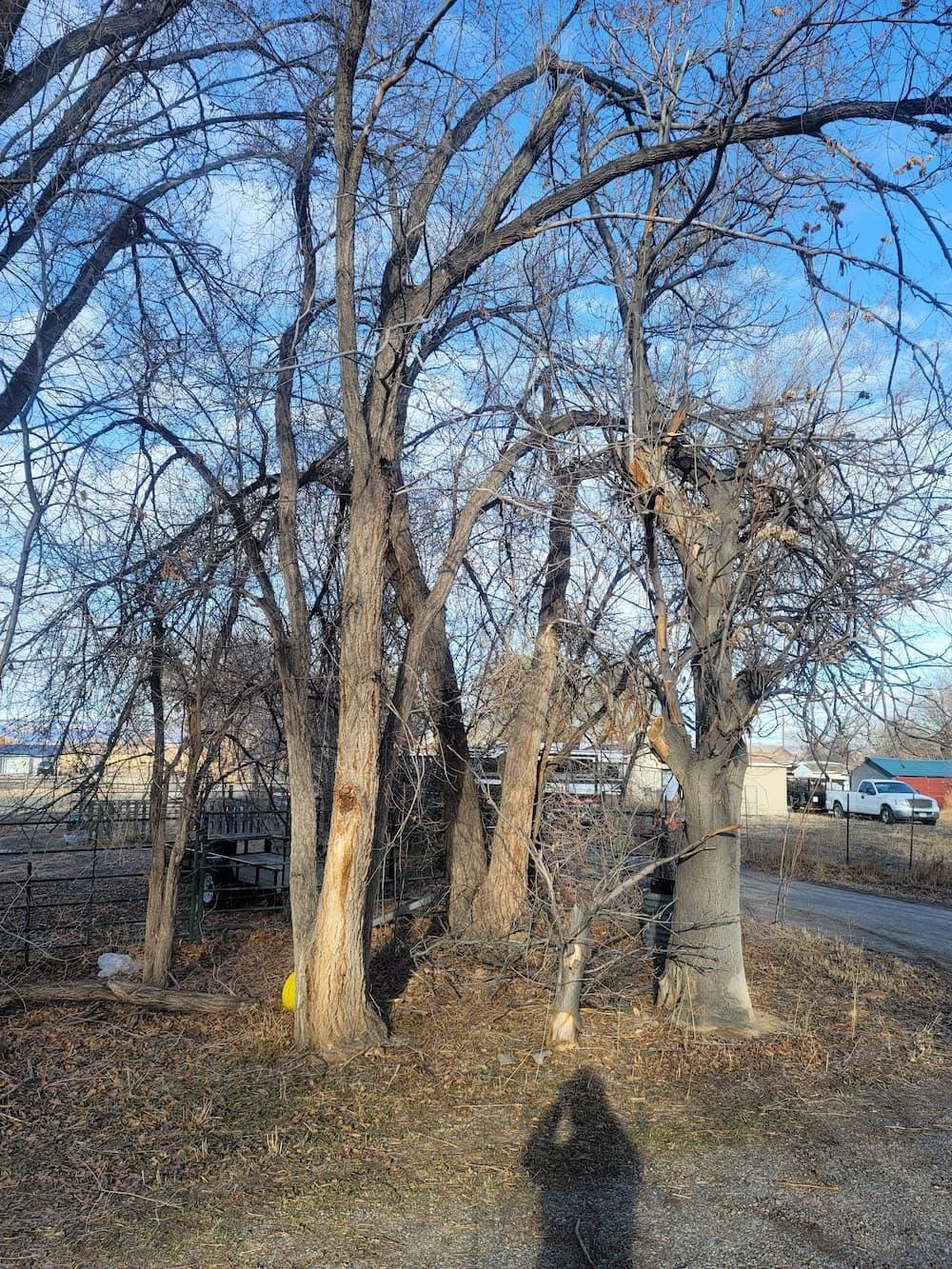
The primary threats to ash trees in the Grand Valley are a combination of invasive and native wood-boring insects. The most devastating of these is the Emerald Ash Borer (EAB), a highly destructive invasive beetle that was officially confirmed on Colorado’s Western Slope in June 2023 [4]. Once EAB infests an ash tree, it aggressively feeds on the inner bark, cutting off the tree’s ability to transport water and nutrients, which ultimately leads to the tree’s death. In addition to EAB, local ash trees are also heavily targeted by the Lilac/Ash Borer and the Ash Bark Beetle [1]. These pests exploit trees that are already stressed by drought, burrowing into the trunk and branches to lay their eggs. Identifying these infestations early is critical, as a tree that has lost more than 30 percent of its canopy to borer damage is typically beyond saving and must be safely removed [5].
Expert Assessment: When to Treat vs. When to Remove
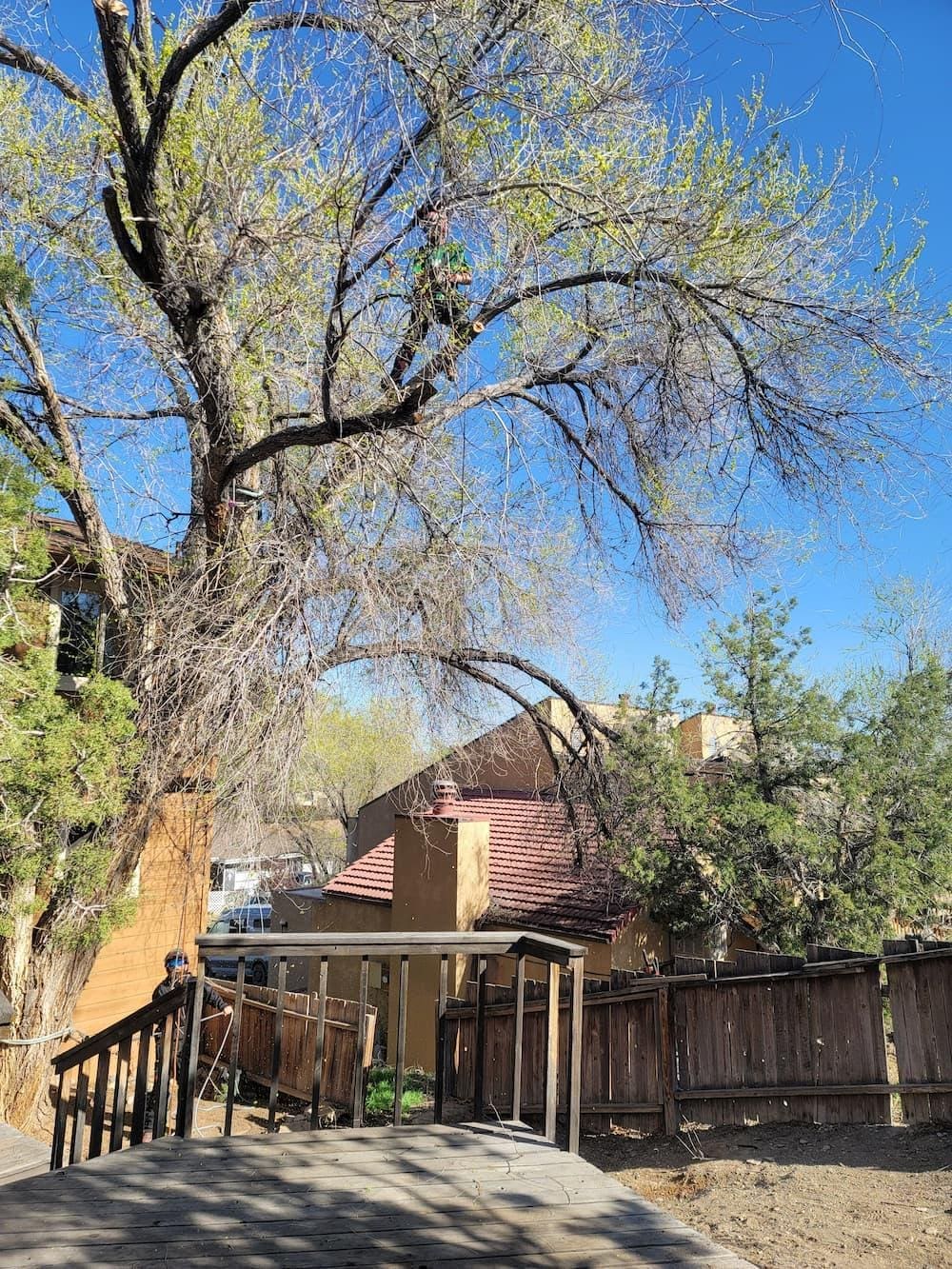
Deciding whether to save or remove an ash tree requires a professional, science-based evaluation. At Big Horn Tree Service, our ISA Certified Arborist conducts comprehensive on-site assessments to determine the viability of your tree. If an ash tree is relatively healthy, structurally sound, and has at least 70 percent of its living canopy intact, it may be an excellent candidate for preventative or curative pest treatments [1]. However, if the tree exhibits significant canopy dieback, severe bark splitting, or structural instability due to extensive borer galleries, removal is the only safe and responsible option. Leaving a dead or dying ash tree standing poses a severe risk to your home, power lines, and family, as ash wood becomes incredibly brittle and prone to sudden snapping once the tree succumbs to borer damage.
Professional Ash Tree Removal Services
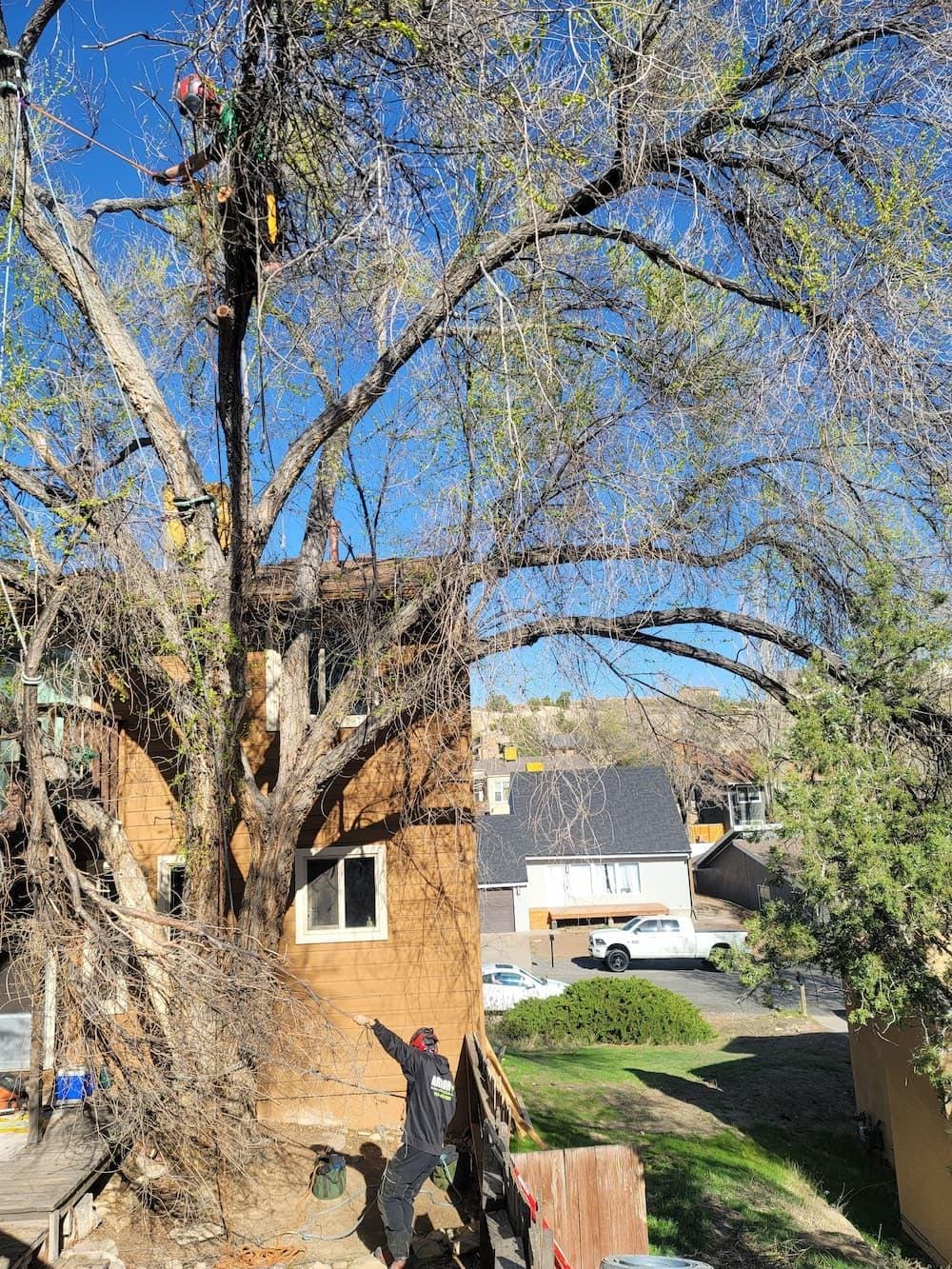
When an ash tree cannot be saved, safe and precise removal is paramount. Big Horn Tree Service specializes in the dismantling and removal of hazardous, diseased, and structurally compromised ash trees across Grand Junction, Redlands, Orchard Mesa, and Fruita. Because borer-infested ash trees become dangerously brittle, they require highly technical removal strategies. Our experienced team uses advanced climbing techniques, specialized rigging, and crane-assisted dismantling to safely bring down even the largest ash trees without damaging your landscaping, fencing, or home. Following the removal, we provide complete stump grinding services to eliminate tripping hazards and leave your yard clean, safe, and ready for new, pest-resistant plantings.
Targeted Pest Treatments and Injections
For ash trees that are still healthy enough to be saved, Big Horn Tree Service offers highly effective, targeted pest management solutions. Led by our Colorado Licensed Pesticide Applicator, we provide specialized trunk injections and bark drenches designed to combat the Emerald Ash Borer, Lilac/Ash Borer, and Ash Bark Beetle. Trunk injections are particularly effective because they deliver the treatment directly into the tree’s vascular system, providing robust protection lasting up to 3 years per application [1]. These treatments are most effective when applied during the active growing season while the tree is fully leafed out and actively pulling nutrients through its trunk. By investing in preventative care, homeowners can preserve the shade, beauty, and property value their ash trees provide for a fraction of the cost of a full tree removal.
Why Choose Big Horn Tree Service
As a family-owned and locally operated business with over 15 years of industry experience, Big Horn Tree Service is deeply committed to protecting the Grand Junction urban canopy. We bring unparalleled expertise to every job, backed by the credentials of an ISA Certified Arborist (License #RM-8191A) and a Colorado Licensed Pesticide Applicator (License #44558). Whether you need a complex, crane-assisted removal of a hazardous ash tree or preventative trunk injections to save a beloved shade tree, our team adheres to strict industry safety guidelines and ANSI A-300 standards. We proudly serve residential and commercial clients throughout the Grand Valley, offering free, comprehensive arborist consultations to help you make the best decisions for your landscape.
Ash Tree Removal & Treatment in Grand Junction, CO
References
[1]: https://www.gjcity.org/1181/Root-For-Our-Trees “City of Grand Junction. “Root For Our Trees.””
[2]: https://www.gjsentinel.com/news/western_colorado/ash-tree-care-continues-in-grand-junction/article_0d58d238-694e-11ef-ae47-4b5143ca675a.html “The Daily Sentinel. “Ash tree care continues in Grand Junction.””
[3]: https://www.facebook.com/kjctnews8/posts/the-city-forester-has-identified-more-than-175-poor-condition-ash-trees-that-wil/943344154475310/ “KJCT News 8. “Grand Junction to remove 175 poor ash trees.””
[4]: https://csfs.colostate.edu/2023/07/06/emerald-ash-borer-confirmed-on-colorados-western-slope-for-first-time/ “Colorado State Forest Service. “Emerald Ash Borer Confirmed on Colorado’s Western Slope.””
[5]: https://www.westminsterco.gov/EmeraldAshBorer “City of Westminster. “Emerald Ash Borer.””