Local Tree Care Across the Grand Valley
Expert Tree Trimming & Removal from Palisade to Loma
Professional care for fruit trees, elms, maples, ash, locusts, pines, spruces, cottonwoods, and more—delivered by a family-owned team that understands Western Colorado trees.
Palisade to Loma
A Unique Mix of Orchards, Shade Trees, and Rural Properties
The Grand Valley’s irrigation history and fruit-growing tradition have created a landscape rich in apples, pears, peaches, cherries, plums, and grapes, alongside mature residential and commercial shade trees.[1] Every tree needs a site-specific plan that considers health, structure, species, water needs, and safety.
Tree Types We Commonly Trim, Prune, and Remove
Grand Junction’s All-Star Tree List includes locally successful examples of elm, honeylocust, maple, oak, and pine. The right service is based on the specific tree, its health, and its location—not a one-size-fits-all approach.[2]
| Tree Type | Common Reasons for Service | How We Help |
|---|---|---|
| Elm trees | Heavy canopies, low clearance, deadwood, limb failure, and structural decline | Selective pruning for balance and clearance, plus safe removal when a tree is unstable or hazardous. |
| Maples | Overgrowth, branch defects, yellowing leaves, and poor vigor | We assess canopy structure, irrigation, root health, and soil-related stress. High-pH Colorado soils can contribute to chlorosis in susceptible trees.[3] |
| Ash trees | Drought stress, insect pressure, thinning canopies, dead branches, and decline | Pruning, diagnostic support, targeted treatment options, and safe removal for unsafe trees. Local ash trees face recognized drought and insect pressure.[4] |
| Honey locust & black locust | Dense canopy growth, suckers, overextended limbs, and storm damage | Canopy shaping, sucker management, structural pruning, and removal when condition or location warrants it. |
| Oak & walnut trees | Large limbs above homes, drives, walkways, and outdoor spaces | Structural pruning and heavy-limb management that respects the tree’s natural form. |
| Aspen, poplars & cottonwoods | Rapid growth, weakened limbs, dieback, storm damage, and significant height | Hazard assessments, technical dismantling, complete removal, and thorough cleanup. |
| Pine & spruce trees | Dead limbs, crowded screens, drought stress, scale, and declining branches | Conservative evergreen pruning and a professional evaluation of pest or stress concerns. Scale can contribute to yellowing, needle drop, and dieback in affected Colorado conifers.[6] |
| Fruit trees | Crowded branches, poor light penetration, missed annual pruning, and reduced production | Production-focused pruning for apples, peaches, pears, cherries, and other orchard or backyard fruit trees.[5] |
Tree Trimming That Supports Health and Safety
Correct pruning is more than a cosmetic service. It removes deadwood, improves clearance from homes and traffic areas, reduces unnecessary branch weight, and helps maintain a tree’s natural architecture. We tailor every service to the tree’s species, age, condition, and location while following ANSI A300 pruning standards.
Safe, Technical Tree Removal
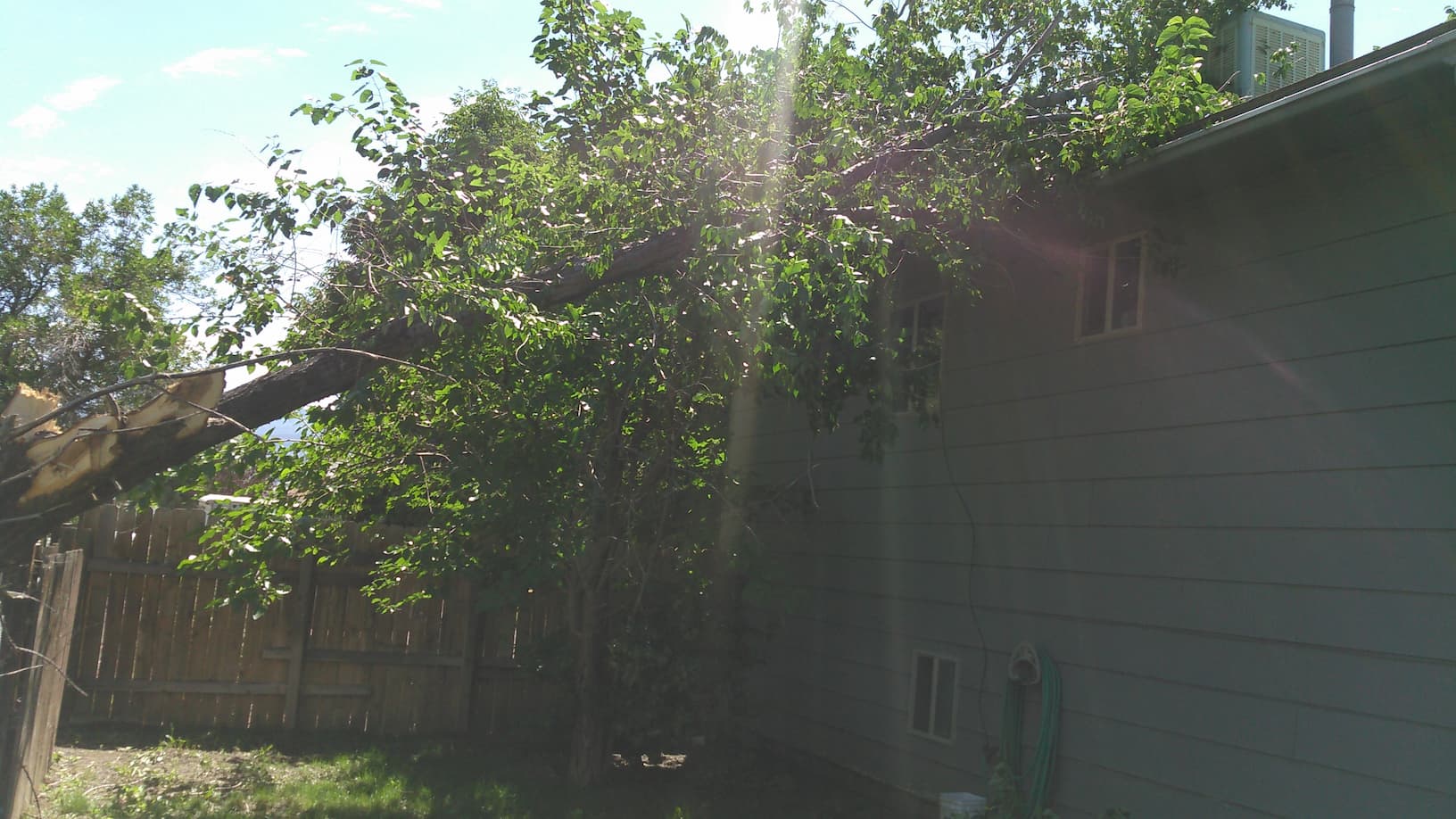
When a tree is dead, dangerously diseased, structurally compromised, invasive, or too close to a valued structure, our team uses controlled climbing, rigging, and dismantling methods to protect the surrounding property. We also offer stump grinding to leave the site clean and ready for new landscaping.
Tree of Heaven Requires a Thoughtful Removal Plan
Tree of Heaven is an invasive, fast-growing tree that spreads by seed and root sprouts. It can crowd out native species, affect pavement and foundations, and create safety concerns due to weak wood.[7]
Invasive Tree Management
Remove Problem Trees—and Protect the Next Landscape Investment
If you suspect Tree of Heaven, do not rely on random topping or repeated cutting alone. Big Horn Tree Service can identify the tree, recommend a coordinated removal plan, grind the stump when appropriate, and leave your site clean for a more suitable replacement.
Our Colorado Licensed Pesticide Applicator can also evaluate pest and disease concerns affecting your established trees, including scale insects, borers, and other health issues.
Let’s Protect Your Property and Your Trees
Do Not Let a Problem Tree Become a Larger Safety Issue.
Whether you need fruit-tree pruning in Palisade, a hazardous cottonwood removed near Loma, an ash evaluated in Grand Junction, or a pine trimmed in Fruita, Big Horn Tree Service is ready to help.
References
- Colorado State University Western Colorado Research Center: History of the Fruit Industry in Mesa County
- City of Grand Junction: Grand Valley All-Star Tree List
- Colorado State University Extension: Iron Chlorosis of Woody Plants
- City of Grand Junction: Grand Junction’s Urban Forestry
- Colorado State University Extension: Growing Tree Fruit in Colorado Gardens
- Colorado State University Agricultural Biology: Scale Insects Affecting Conifers
- Colorado Department of Agriculture: Tree of Heaven